Persona has cemented its status as a classic video game franchise. The newest release, Persona 5 Royal, upholds its legacy. Chief among its strengths is the character design, with creator Shigenori Soejima emphasizing specific traits to make them more striking than in his earlier works. These design elements merit exploration beyond their immediate appearance and should appeal to anyone interested in visual arts.
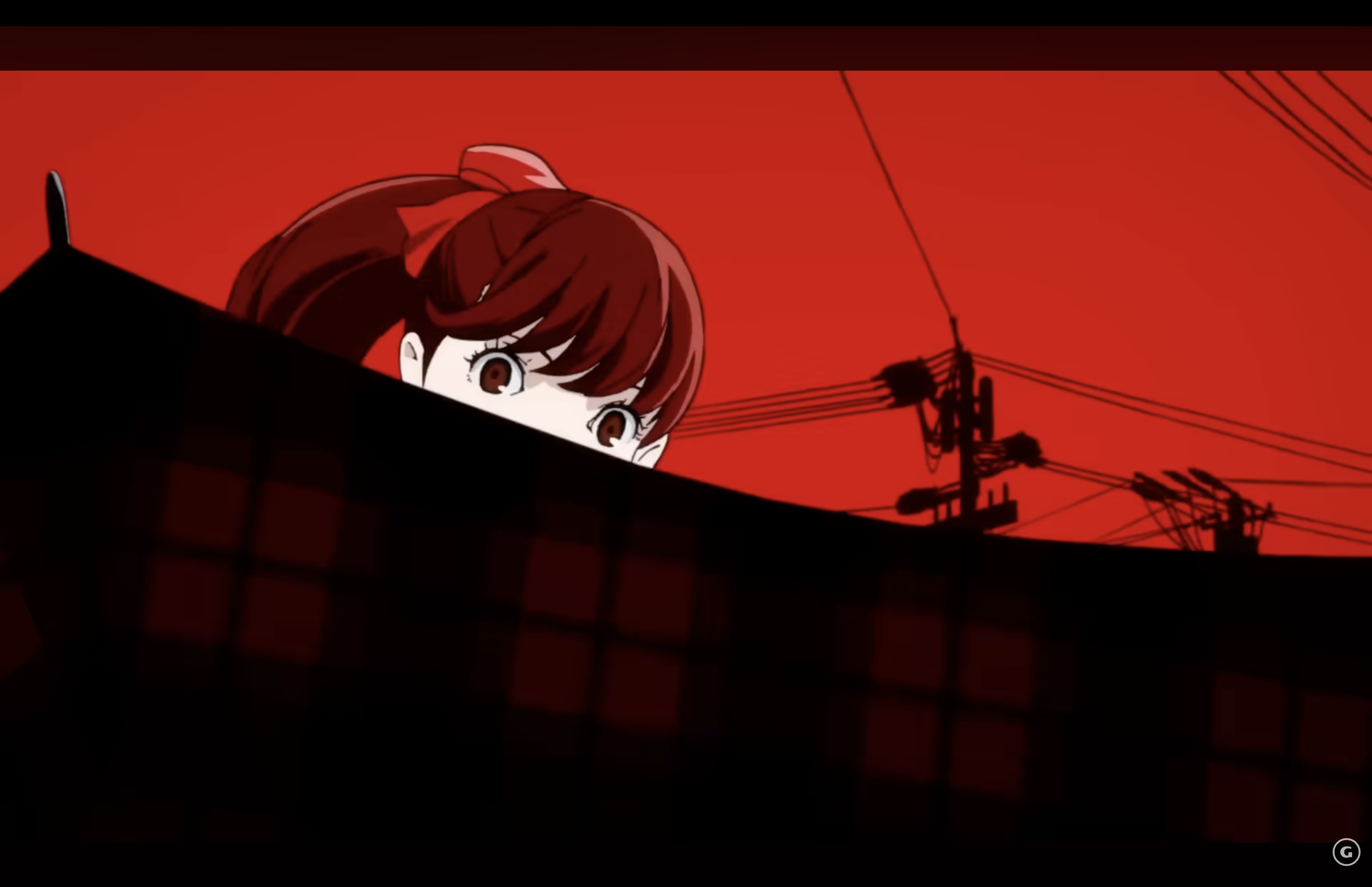
The character is in the details
Several YouTube videos feature Soejima discussing his work on Persona. Among them, the video released on GameSpot’s channel is especially noteworthy for its focus on Persona 5 Royal and the development of a new character, Kasumi Yoshizawa.
Soejima explains that he always needs an initial element to spark the concept he plans to develop. While the idea is straightforward, it becomes more meaningful when illustrated with a specific example—Kasumi. He says the character was inspired by a very specific image: a woman’s ponytail seen from behind. This was not meant to depict a real individual, nor any particular social type. Later in the same video, Soejima shares another useful insight. He notes that players’ perception of a character in the game depends on the relationship between the character’s eyes and bangs; small tweaks to either can suggest different personality traits.
Whether one agrees or not, Soejima’s statements demonstrate a connection to specific aesthetic discourses. They recall Roland Barthes’s notions of obtuse meaning and punctum, as described in the French thinker’s analyses of certain cinema and certain photography—visual traits capable of transfiguring images, giving them a life not entirely reducible to the reproduction–mimesis pairing. While Barthes saw these concepts as beyond the author’s full control, Soejima’s statements and actions suggest an approach in which the author bears responsibility for these expressive possibilities.
A system of signs
Another key aspect of Soejima’s work is the idea of the character as a system of signs, similar to how polyphony is prominent in specific literary works. The same idea also appears to be partly intrinsic to the language of video games, especially in terms of player–character interactions. In Persona 5 Royal, this point becomes visually explicit—and here, too, Kasumi’s case offers further valuable insights.
Further into the GameSpot video, the Japanese artist explains that he dressed her in an outfit reminiscent of Joker, the game’s protagonist, to underscore her significance. The choice subtly shapes the player’s perception and attention toward the new female character without altering existing roles. The mask, the intricate graphic design of her “persona,” and Soejima’s overall fashion sensibility are also worth noting. These elements extend beyond Kasumi, as all characters exhibit vivid colors, sexy bodysuits, fashionable jackets, and an affinity for kawaii (cute) culture, as shown in the game’s trailer, available online and nicknamed, tellingly enough, “cinematic.” Once again, following Barthes, one might argue that such a fashion sensibility constitutes a system of visual innovations and distinctive color palettes imbued with cultural references.
In summary, Persona 5 Royal’s character design might remind pompous purists and myopic eyes grappling with the visual arts that specific video games can also feature meaningful nuances usually seen only in the works of a few artists or, perhaps, in rare traces of experimental cinema.
This is a revised version of an article originally written in Italian and published in Alias, the weekly magazine of Il manifesto.


Leave a Reply