Jean-Luc Godard famously stated, “Cinema is cinema,” underscoring that this artistic medium functions as both a language and a worldview. This assertion remains relevant today and gains significance when considered alongside various instances in film history, including those associated with experimental filmmaking.
Whether a film tells a story or challenges conventions, its language ought to be acknowledged similarly to how literature is perceived. Despite its many genres, literature is, in fact, commonly viewed as a unified entity. This perspective can enhance one’s appreciation for Free Radicals: A History of Experimental Film, a feature film directed by Pip Chodorov.
Pip Chodorov, who began filmmaking in 1971, is recognized as one of the most significant contemporary figures in audiovisual experimentation. Beyond directing, Chodorov has a substantial history in cinema distribution and promotion, highlighted by the establishment of Re: Voir and the Paris-based Film Gallery, a space dedicated solely to the art of experimental filmmaking.
What is the film Free Radicals about? In a captivating episode of the France Culture radio program Le RenDez-Vous (December 8, 2010, accessible on the broadcaster’s website), Pip Chodorov shares that the concept for Free Radicals came to him after watching Wim Wenders’ 2003 film The Soul of a Man, which highlights three talented but lesser-known blues musicians. Similarly, Free Radicals seeks to illuminate the work of influential experimental filmmakers who have often been overlooked. Chodorov aims to capture their views, showcase their creations, and grant them the acknowledgment they deserve—an acknowledgment that is frequently minimized by mainstream media’s neglect of experimental cinema.
Pip Chodorov infused his project with artistic creativity while developing it. He enriched it by incorporating a concise yet powerful selection from his audiovisual repertoire, showcasing clips of personal footage from family home movies and his own cinematic projects. These clips are recontextualized alongside the portrayals of experimental filmmakers. Additionally, he involved his father, Stephen Chodorov, a television writer who worked in the U.S. during the 1960s and 1970s and introduced Pip to experimental cinema. In Free Radicals, Stephen Chodorov once again takes on a mentoring role, collaborating with his son by providing valuable stories and insights.
Free Radicals begins and ends with a balanced prologue and epilogue in a diary-like style. It embodies a lyrical essence and employs various film formats (8mm, Super-8mm, 16mm, Super-16mm) to showcase a diverse lineage of visuals. Through the deeply personal and genuine viewpoints of the featured filmmakers, the film tells a poetic and personal story of experimental cinema. It provides a heartfelt and suitable introduction to the methods of image-making that have historically existed alongside the audiovisual sector and the art world, shaping culture while facing challenges from financial, political, and media marginalization.
As the movie progresses, we encounter notable figures such as Hans Richter, renowned for his abstract films and artistic reinterpretations of everyday items; Stan Vanderbeek, known for his innovative graphics; and Stan Brakhage, whose film Existence is Song, from The Dante Quartet (1987), was previously aired during a Brakhage and Chodorov interview on French television. Free Radicals also features Robert Breer, whose 1957 film Extreme Recreation can engage even the most detached viewers, along with Len Lye—the title of Chodorov’s Free Radicals originates from a work by Lye himself. Moreover, particular importance is given to the legacies and innovations of Jonas Mekas and Peter Kubelka, with a primary focus on Mekas’s film diaries and Kubelka’s metric editing methods. Chodorov emphasizes the significant contributions of these two influential artists, highlighting their enduring friendship and accomplishments, which include the concept of “Invisible Cinema” and the establishment of the Anthology Film Archive in New York. The narrative is further enhanced by intriguing clips from their films, such as Kubelka’s 1957 Adebar and Mekas’s 1976 Lost Lost Lost.
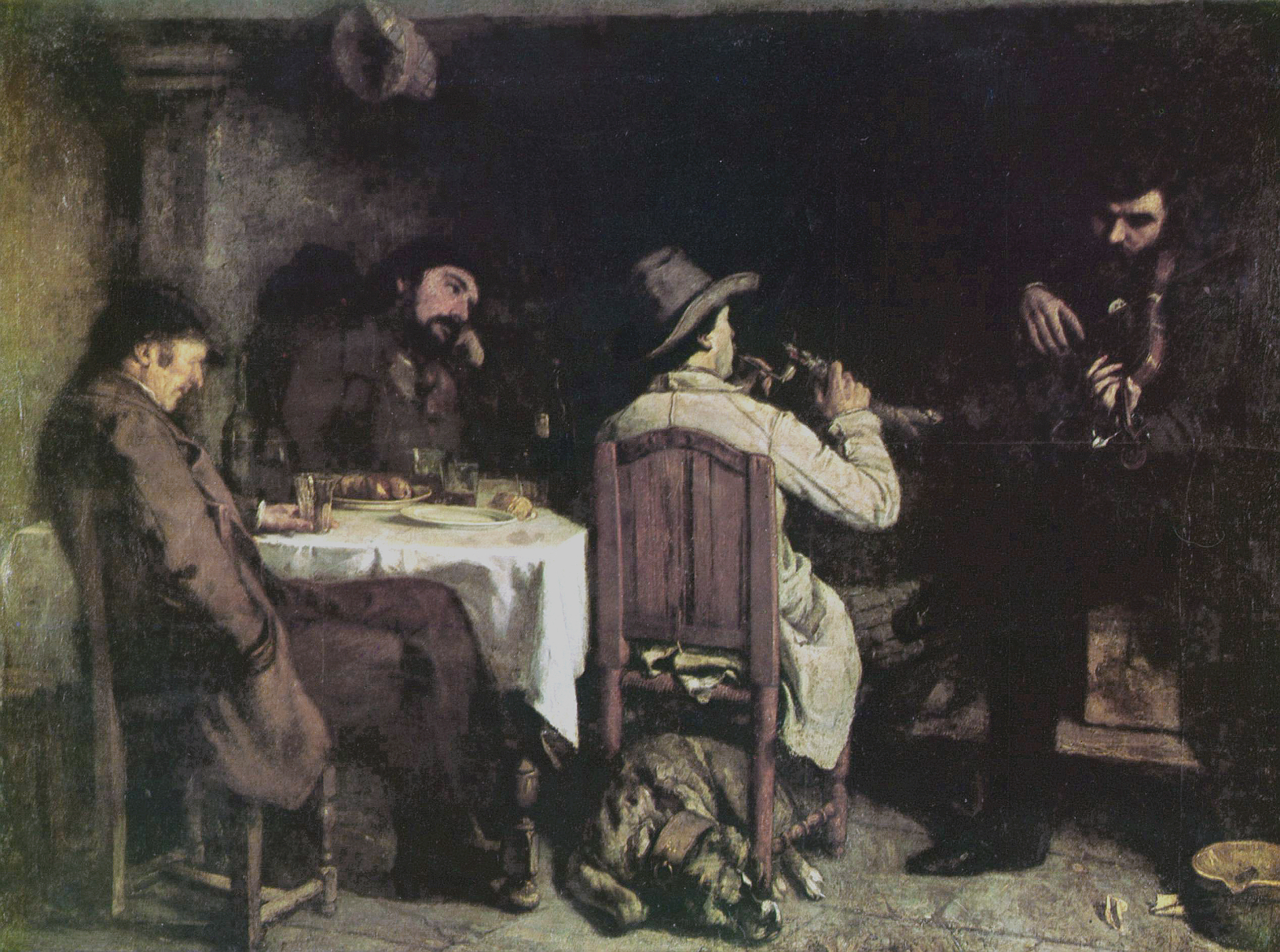
The filmmakers showcased in Free Radicals highlight the necessity of engaging audiences with experimental cinema; they urge viewers to find meaning in experimental images beyond the possible initial shock factor. In this respect, it is worth mentioning the segment of Free Radicals in which Peter Kubelka likens experimental cinema to painting, explicitly referencing Gustave Courbet’s painting L’Après-dînée à Ornans (1849, oil on canvas). Kubelka contends that the controversy surrounding Courbet’s artwork was “experimental,” as nonrepresentational motives drove it. Notably, Courbet opted for a large canvas to depict figures that, according to 19th-century painting standards, should not have been displayed so prominently.
In conclusion, by watching Free Radicals, audiences can embark on a creative exploration of experimental cinema that resonates with Jean-Luc Godard’s artistic romanticism found in Histoire(s) du Cinéma. Pip Chodorov’s film stands out as a remarkable piece, fusing informative content with compelling lyricism. It explores the links between historical occurrences and personal narratives, emphasizing the difference between objective history and artistic storytelling. The writing is complex, providing an intimately personal perspective while honoring the legacies of some of the most influential experimental filmmakers in history.
This is a revised version of an article originally written in Italian and published in Alias, the weekly magazine of Il manifesto.
 ISTRUMENTI
Leave a comment